
Our Story
Cleopatra VII: The Last Pharaoh of Egypt
Discover the remarkable life of Cleopatra VII, the last active ruler of Ancient Egypt. Explore her intelligence, political skill, relationships with Julius Caesar and Mark Antony, her struggle against the expanding Roman Empire, and how her death marked the end of more than 3,000 years of pharaonic civilization.
ARTICLE INTRODUCTION
Few historical figures are as famous—or as misunderstood—as Cleopatra.
For more than two thousand years, writers, artists, filmmakers, and historians have retold her story.
Popular culture often focuses on her beauty and her romantic relationships with powerful Roman leaders.
The real Cleopatra, however, was far more impressive.
She was:
- A skilled politician
- A gifted linguist
- A capable ruler
- A strategist
- A diplomat
- One of the most educated women of the ancient world
At a time when Egypt faced the growing power of Rome, Cleopatra fought to preserve the independence of her kingdom.
Although she ultimately failed, her story became one of history’s greatest dramas.
Her death marked not only the end of her reign but also the end of Ancient Egypt itself
WHO WAS AKHENATEN?
Cleopatra was born in:
69 BC
into the ruling Ptolemaic Dynasty.
The Ptolemies were descendants of one of Alexander the Great’s generals.
Although they ruled Egypt for nearly three centuries, they were originally Macedonian Greeks rather than ethnic Egyptians.
Cleopatra was different from many of her predecessors.
Unlike earlier Ptolemaic rulers, she embraced Egyptian traditions and actively presented herself as a legitimate Egyptian pharaoh.
Most remarkably, she was reportedly the first ruler of her dynasty to learn the Egyptian language.
This helped strengthen her connection with the people she governed
EGYPT BEFORE CLEOPATRA
By Cleopatra’s time, Egypt was no longer the dominant power it had been under rulers such as:
Ramses II
Thutmose III
Amenhotep III
The kingdom remained wealthy but faced growing pressure from Rome.
Rome increasingly influenced Egyptian politics, economics, and military affairs.
Many observers believed it was only a matter of time before Egypt lost its independence.
When Cleopatra came to power, she inherited a kingdom facing enormous challenges.
QUICK FACTS ABOUT CLEOPATRA
|
Fact |
Details |
|
Full Name |
Cleopatra VII Philopator |
|
Dynasty |
Ptolemaic Dynasty |
|
Reign |
51–30 BC |
|
Capital |
Alexandria |
|
Father |
Ptolemy XII Auletes |
|
Famous For |
Last Pharaoh of Egypt |
|
Allies |
Julius Caesar, Mark Antony |
|
Opponent |
Octavian (Augustus) |
|
Death |
30 BC |
|
Legacy |
End of Ancient Egypt and Beginning of Roman Egypt |
THE CITY OF ALEXANDRIA
Cleopatra ruled from:
Alexandria
one of the greatest cities of the ancient world.
Founded by Alexander the Great in 331 BC, Alexandria was famous for:
- Its cosmopolitan population
- The Great Library
- The Pharos Lighthouse
- Scientific research
- Philosophy
- International trade
The city served as the intellectual center of the Mediterranean.
Many of the world’s leading scholars worked there.
CLEOPATRA'S EDUCATION
One reason Cleopatra stands apart from many rulers is her education.
Ancient sources describe her as exceptionally intelligent.
She reportedly spoke several languages and studied:
- Philosophy
- Mathematics
- Diplomacy
- Politics
- Literature
- Astronomy
Rather than relying solely on advisors, Cleopatra actively participated in governing her kingdom.
THE STRUGGLE FOR THE THRONE
After the death of her father, Cleopatra was expected to rule jointly with her younger brother:
Ptolemy XIII
Following Ptolemaic tradition, the two were formally married.
Political conflict quickly emerged.
Power struggles within the royal court forced Cleopatra into temporary exile.
Her future seemed uncertain.
Then events in Rome changed everything
CLEOPATRA AND JULIUS CAESAR
In 48 BC, the Roman leader:
Julius Caesar
arrived in Alexandria.
Cleopatra recognized an opportunity.
According to ancient accounts, she secretly met Caesar and successfully gained his support.
With Roman assistance, she regained control of Egypt.
The alliance transformed her political position.
It also produced a son:
Ptolemy XV Caesar
better known as:
Caesarion
meaning:
“Little Caesar”
CLEOPATRA'S RELATIONSHIP WITH CAESAR
Popular culture often portrays this relationship purely as a romance.
In reality, it was also a political partnership.
Caesar gained influence in Egypt.
Cleopatra secured her throne.
Their alliance strengthened Egypt’s position during a turbulent period.
When Caesar was assassinated in 44 BC, Cleopatra once again faced uncertainty.
MARK ANTONY AND THE EASTERN MEDITERRANEAN
After Caesar’s death, Rome entered another civil war.
One of the dominant figures to emerge was:
Mark Antony
Cleopatra and Antony formed both a political and personal alliance.
Together they controlled vast territories across the eastern Mediterranean.
For a time, it appeared possible that they might establish a powerful eastern empire capable of rivaling Rome itself.
CLEOPATRA: BEAUTY OR INTELLIGENCE?
One of the greatest misconceptions about Cleopatra concerns her appearance.
Ancient coins and statues do not necessarily depict an extraordinary beauty.
What ancient writers consistently emphasize is:
Her Intelligence
Her Charisma
Her Presence
Her Ability to Persuade
Her influence came less from physical appearance and more from political skill and personal magnetism.
CLEOPATRA AS PHARAOH
Many people forget that Cleopatra was not merely a queen.
She ruled as:
Pharaoh of Egypt
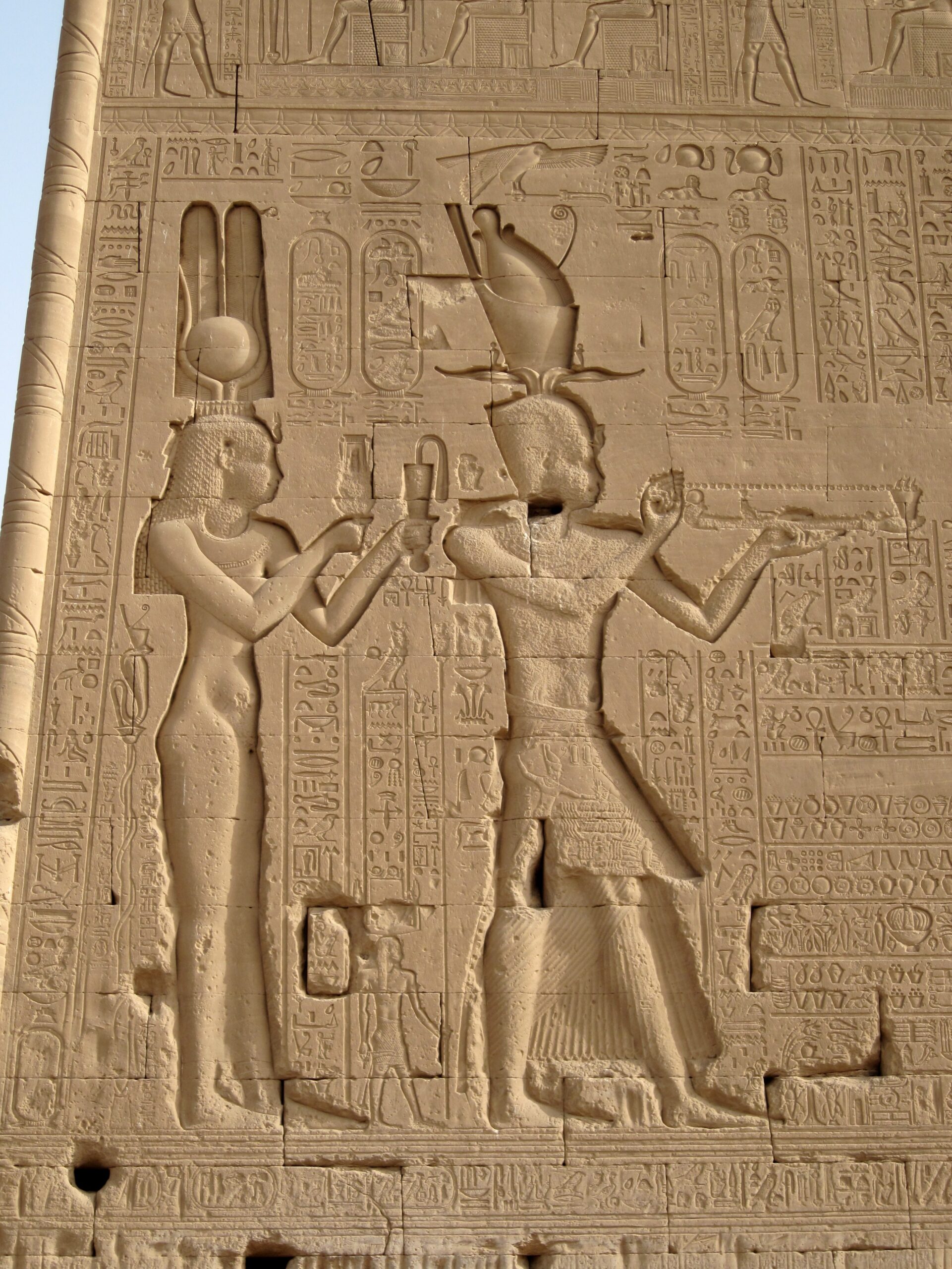
She participated in religious ceremonies and embraced traditional Egyptian royal imagery.
Temples depicted her alongside Egyptian gods.
She often associated herself with:
Isis
one of Egypt’s most important goddesses
THE BATTLE OF ACTIUM
In 31 BC, the forces of Antony and Cleopatra faced Octavian in:
The Battle of Actium
off the coast of Greece.
The battle ended in defeat for Antony and Cleopatra.
The consequences were catastrophic.
Their political future collapsed.
Egypt’s independence hung by a thread.
THE DEATH OF CLEOPATRA
One year later, Octavian invaded Egypt.
Mark Antony died shortly afterward.
Facing defeat and capture, Cleopatra chose death.
She died in:
30 BC
at approximately thirty-nine years of age.
DID CLEOPATRA REALLY DIE FROM A SNAKE BITE?
This is one of history’s most famous stories.
According to tradition, Cleopatra committed suicide using:
An Egyptian Cobra (Asp)
However, modern historians remain uncertain.
Alternative theories suggest:
- Poison
- A combination of toxic substances
- Other methods of suicide
The exact circumstances remain unknown.
THE LOST TOMB OF CLEOPATRA
Unlike Tutankhamun, Ramses II, or Hatshepsut, Cleopatra’s tomb has never been definitively discovered.
This remains one of archaeology’s greatest mysteries.
Many researchers believe her burial site may lie near:
Taposiris Magna
west of Alexandria.
Excavations continue today.
The discovery of Cleopatra’s tomb would rank among the greatest archaeological finds of modern times.
THE END OF ANCIENT EGYPT
Cleopatra’s death marked a turning point in world history.
For more than three thousand years, Egypt had been ruled by pharaohs.
After 30 BC:
Egypt Became a Roman Province
The age of the pharaohs officially ended.
A new chapter began.
WHY CLEOPATRA BECAME A LEGEND
Few rulers have inspired more fascination.
Her story combines:
✔ Political intrigue
✔ International diplomacy
✔ Romance
✔ Warfare
✔ Ancient Egypt
✔ The Roman Empire
✔ Tragic downfall
These elements transformed Cleopatra into one of history’s most enduring legends
FREQUENTLY ASKED QUESTIONS
Was Cleopatra Egyptian?
Ethnically, she was Macedonian Greek, but she ruled as an Egyptian pharaoh and embraced Egyptian culture.
Was Cleopatra beautiful?
Ancient sources emphasize her intelligence, charisma, and presence more than physical beauty.
Did Cleopatra marry Julius Caesar?
No. They had a relationship, but they were never married.
Did Cleopatra have children?
Yes. She had Caesarion with Julius Caesar and additional children with Mark Antony.
Has Cleopatra’s tomb been found?
No. Its location remains one of archaeology’s greatest mysteries
related journals

6 min read
6 min read
6 min read