
Our Story
How Royal Tombs Were Built
Deep beneath the desert mountains of Egypt lie some of humanity’s greatest engineering achievements. Discover how ancient craftsmen planned, excavated, decorated, and furnished the magnificent tombs of the pharaohs, creating eternal houses designed to last forever.
overview
The royal tombs of Ancient Egypt are among the most extraordinary monuments ever created.
Long corridors.
Massive burial chambers.
Walls covered with colorful religious scenes.
Hidden deep within desert cliffs.
These tombs were not built by slaves or through mysterious lost technologies.
Instead, they were the product of careful planning, skilled craftsmanship, advanced engineering, and decades of labor.
Every tomb was designed for a single purpose:
To Help a Pharaoh Achieve Eternal Life
The result was a remarkable fusion of architecture, religion, art, astronomy, and engineering.
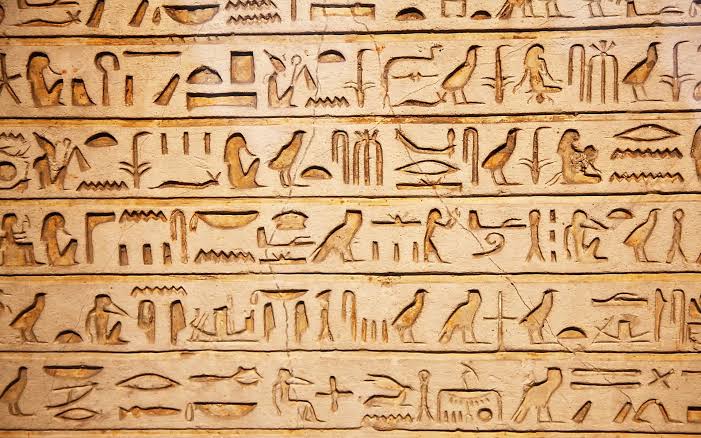
WHY DID PHARAOHS BUILD TOMBS?
For Ancient Egyptians, death was not the end.
A king’s tomb functioned as:
- A burial place
- A sacred monument
- A gateway to eternity
- A resurrection machine
The tomb protected:
- The mummy
- Funerary treasures
- Religious texts
- Magical equipment
Everything necessary for the king’s eternal existence.
WHEN DID TOMB CONSTRUCTION BEGIN?
Work usually started shortly after a king ascended the throne.
Because nobody knew how long a ruler would live, construction often continued throughout his reign.
Some kings ruled for:
- 5 years
- 20 years
- 40 years
- More than 60 years
Longer reigns generally resulted in larger and more elaborate tombs.
Example
Ramses II ruled for approximately 66 years, allowing extensive royal building projects.
CHOOSING THE LOCATION
During the New Kingdom, most royal tombs were built in:
The Valley of the Kings
The location offered several advantages.
Isolation
Remote desert valleys reduced the risk of robbery.
Natural Protection
Steep cliffs created a naturally defensible landscape.
Religious Symbolism
The western bank of the Nile was associated with death and the setting sun.
The Sacred Peak
The mountain of El-Qurn rises above the valley in a pyramid-like shape.
Many scholars believe this natural peak held symbolic significance
WHO DESIGNED THE TOMBS?
Royal tombs required highly trained specialists.
The project typically involved:
Architects
Responsible for planning the overall design.
Surveyors
Measured and aligned corridors and chambers.
Engineers
Solved structural challenges.
Scribes
Maintained records and instructions.
Priests
Ensured religious requirements were incorporated.
Construction combined practical engineering with sacred symbolism.
THE VILLAGE OF THE TOMB BUILDERS
The craftsmen who built royal tombs lived in:
Deir el-Medina
A specially planned settlement near the Valley of the Kings.
Its residents included:
- Stonecutters
- Sculptors
- Painters
- Plasterers
- Draftsmen
- Carpenters
They were among the most skilled workers in Ancient Egypt.
EXCAVATING THE TOMB
Unlike pyramids, New Kingdom tombs were carved directly into limestone bedrock.
The process began with excavation.
Workers used:
- Copper tools
- Bronze tools
- Dolerite pounding stones
- Wooden mallets
- Chisels
Teams gradually cut deeper into the mountain.
WOMEN IN ANCIENT EGYPT
Compared to many ancient societies, Egyptian women enjoyed significant legal rights.
Women could:
- Own property
- Inherit wealth
- Conduct business
- Initiate divorce
- Appear in court
Some women even ruled Egypt.
The most famous example is:
Hatshepsut
one of Egypt’s greatest pharaohs
CHILDHOOD IN ANCIENT EGYPT
Children spent much of their early years helping their families.
They also enjoyed games and toys.
Archaeologists have discovered:
- Dolls
- Board games
- Balls
- Animal figurines
Education varied according to social status.
Most children learned family trades.
How Long Did Excavation Take?
Large tombs could require:
5–20 Years
depending on complexity and the king’s reign length.
THE BURIAL CHAMBER
The most sacred space within the tomb.
This chamber housed:
- The sarcophagus
- The mummy
- Protective shrines
- Funerary treasures
Many burial chambers featured astronomical ceilings decorated with:
- Stars
- Constellations
- Solar imagery
These decorations linked the king to the cosmos.
DECORATING THE WALLS
Once excavation ended, artists began transforming bare rock into sacred space.
Step 1
Smoothing the Walls
Rough stone surfaces were leveled and plastered.
Step 2
Sketching Designs
Draftsmen outlined scenes using red pigment.
Master artists reviewed and corrected the designs.
Many corrections remain visible today.
Step 3
Carving Reliefs
Stone carvers created detailed reliefs.
Step 4
Painting
Artists applied vibrant mineral pigments.
Common colors included:
- Red ochre
- Yellow ochre
- Carbon black
- Egyptian blue
- Malachite green
Many colors remain remarkably vivid after more than 3,000 years
WHAT DO THE WALL SCENES SHOW?
The decorations were not simply art.
They were magical tools.
Common subjects include:
Gods and Goddesses
Providing protection.
Solar Journeys
The sun god traveling through the underworld.
Resurrection Scenes
The king achieving rebirth.
Sacred Texts
Religious instructions for eternity
THE BOOKS OF THE UNDERWORLD
Several important religious compositions appear inside royal tombs.
Examples include:
- Amduat
- Book of Gates
- Book of Caverns
- Litany of Ra
- Book of the Earth
These texts guided the king through the afterlife
WHY SO MANY TOMBS WERE ROBBED
Despite extraordinary efforts, many tombs were looted.
Contributing factors included:
- Political instability
- Economic hardship
- Corruption
- Insider knowledge
Some robberies occurred only years after burial.
Ancient records document investigations into royal tomb thefts
WHAT MODERN SCIENCE REVEALS
Archaeologists now use:
- Laser scanning
- Ground-penetrating radar
- Digital mapping
- 3D modeling
to study tombs in extraordinary detail.
These technologies continue to reveal new information about construction techniques and ancient craftsmanship.
THE GENIUS OF EGYPTIAN TOMB BUILDERS
Royal tombs demonstrate an astonishing combination of:
✔ Engineering
✔ Architecture
✔ Art
✔ Religion
✔ Mathematics
✔ Project Management
The craftsmen of Deir el-Medina created monuments that have survived for more than three millennia.
Their work remains among the greatest achievements of the ancient world
FREQUENTLY ASKED QUESTIONS
Who built the royal tombs?
Highly skilled craftsmen, artists, architects, and laborers, many of whom lived at Deir el-Medina.
How long did it take to build a royal tomb?
Typically between 5 and 20 years, depending on size and complexity.
Were tombs built before or after a king died?
Construction usually began shortly after the king came to power and continued throughout his reign.
Why were tombs hidden?
To reduce the risk of robbery and protect the king’s burial.
Which royal tomb is the most famous?
The tomb of Tutankhamun is the most famous due to its remarkable preservation
WHY THE GREAT PYRAMID STILL AMAZES THE WORLD
The Great Pyramid represents:
✔ Architectural genius
✔ Engineering innovation
✔ Mathematical precision
✔ Astronomical knowledge
✔ Religious belief
✔ Human determination
More than four thousand years after its construction, it remains one of humanity’s greatest achievements.
FREQUENTLY ASKED QUESTIONS
How old is the Great Pyramid?
Approximately 4,500 years old.
Who built the Great Pyramid?
It was built during the reign of Pharaoh Khufu.
How many stones were used?
Approximately 2.3 million blocks.
Is the Great Pyramid aligned with true north?
Yes, with extraordinary accuracy.
Did Egyptians know advanced mathematics?
They possessed sophisticated practical geometry and surveying skills, although modern interpretations involving pi and the Golden Ratio remain debated.
related journals

6 min read
6 min read
6 min read