
Our Story
Tutankhamun: The Boy King of Ancient Egypt
Discover the remarkable story of Tutankhamun, the young pharaoh whose tomb became the greatest archaeological discovery of the twentieth century. Explore his life, family, reign, health challenges, mysterious death, and the treasures that made him one of the most famous rulers in history.
ARTICLE INTRODUCTION
More than three thousand years after his death, Tutankhamun remains the most famous pharaoh in the world.
Yet during his lifetime, he was neither Egypt’s greatest conqueror nor its most powerful ruler.
Unlike Ramses II, who reigned for more than six decades, Tutankhamun ruled for only a few years before dying unexpectedly as a teenager.
His fame comes from a remarkable twist of history.
While the tombs of many powerful pharaohs were looted in antiquity, Tutankhamun’s tomb remained largely untouched for more than 3,000 years.
When British archaeologist Howard Carter discovered it in 1922, the world was astonished.
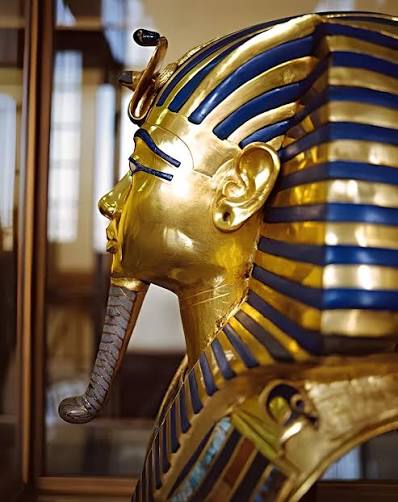
Inside were thousands of treasures, including the now-famous golden mask that has become one of the most recognizable objects on Earth.
Yet beyond the gold and treasures lies a fascinating human story—a young king who faced physical challenges, inherited a troubled kingdom, and died before reaching adulthood.
Modern scientific research has transformed our understanding of Tutankhamun, revealing a far more complex and vulnerable individual than the legendary image often portrayed
WHO WAS TUTANKHAMUN?
Tutankhamun became pharaoh at an extraordinarily young age.
Most historians believe he was approximately:
Eight or Nine Years Old
when he ascended the throne.
Because of his youth, experienced advisors likely handled many government responsibilities.
His reign occurred during a turbulent period in Egyptian history.
His father is widely believed to have been:
Akhenaten
the controversial pharaoh who attempted to transform Egypt’s traditional religion.
THE WORLD OF RAMSES II
To understand Tutankhamun’s importance, we must understand the crisis he inherited.
Before his reign, Akhenaten had introduced radical religious reforms.
He promoted the worship of a single deity:
Aten
the sun disk.
This challenged centuries of religious tradition and weakened the influence of powerful priesthoods.
The result was political instability.
When Tutankhamun became king, Egypt needed restoration.
QUICK FACTS ABOUT TUTANKHAMUN
Fact | Details |
Full Name | Tutankhamun |
Dynasty | 18th Dynasty |
Reign | c. 1332–1323 BC |
Age at Death | Approximately 18–19 Years |
Father | Probably Akhenaten |
Wife | Ankhesenamun |
Burial Place | Tomb KV62, Valley of the Kings |
Famous For | Intact Tomb Discovery |
Discovery | Howard Carter, 1922 |
THE RETURN OF TRADITIONAL RELIGION
One of the most important developments during Tutankhamun’s reign was the restoration of traditional Egyptian beliefs.
The young king reversed many of Akhenaten’s reforms.
Ancient temples were reopened.
The worship of traditional gods returned.
Priests regained influence.
Even the king’s name changed.
Originally:
Tutankhaten
meaning “Living Image of Aten”
became:
Tutankhamun
meaning “Living Image of Amun.”
This symbolized Egypt’s return to traditional religion.
THE HEALTH OF TUTANKHAMUN
This is one of the most fascinating aspects of modern Egyptology.
For decades, historians imagined Tutankhamun as a healthy young ruler.
Scientific studies suggest a different reality
Royal Family Intermarriage
Ancient Egyptian royal families often married close relatives.
This practice aimed to preserve royal bloodlines.
Modern DNA research suggests Tutankhamun’s parents were closely related, possibly brother and sister.
Many researchers believe this contributed to several genetic health issues
Physical Challenges
Modern CT scans and scientific analysis indicate that Tutankhamun may have suffered from several conditions.
Evidence suggests:
Clubfoot
One of his feet appears to have been significantly deformed.
This likely affected his mobility.
Was Tutankhamun Disabled?
This remains a subject of scholarly debate.
Most Egyptologists agree that he likely experienced mobility problems.
However, he was still capable of:
- Hunting
- Participating in royal ceremonies
- Fulfilling his duties as pharaoh
The image of a completely incapacitated king is not supported by evidence.
The reality appears more nuanced.
HOW DID TUTANKHAMUN DIE?
For decades, speculation surrounded his death.
Theories included:
- Murder
- Assassination
- Chariot accident
- Disease
- Genetic illness
Modern evidence has eliminated many earlier theories.
The Chariot Crash Theory
For years, researchers believed a severe chariot accident killed him.
Recent studies are less certain.
Evidence does not conclusively support this explanation.
The Most Likely Explanation
Current research suggests his death may have resulted from:
A combination of:
✔ Physical weakness
✔ Bone problems
✔ Infection
✔ Malaria
Rather than a dramatic assassination.
TREASURES OF TUTANKHAMUN
The tomb contained more than:
5,000 Objects
including:
- Golden shrines
- Chariots
- Furniture
- Jewelry
- Weapons
- Ceremonial objects
and, most famously:
The Golden Mask
THE GOLDEN MASK
The mask weighs approximately:
11 Kilograms
of gold.
It has become:
- A symbol of Egypt
- A symbol of archaeology
- One of the most famous artifacts ever discovered
Few objects in human history are more recognizable.
WHY TUTANKHAMUN BECAME MORE FAMOUS THAN OTHER PHARAOHS
Ironically, Tutankhamun became famous not because of what he accomplished during life.
He became famous because:
- His tomb survived
- Its treasures survived
- Archaeologists found it largely intact
Had his tomb been looted like many others, he might be only a minor historical figure today.
TUTANKHAMUN'S LEGACY
Although his reign was short, Tutankhamun became the face of Ancient Egypt.
His discovery transformed:
- Archaeology
- Egyptology
- Museum exhibitions
- Public interest in Ancient Egypt
More books, documentaries, and exhibitions have been devoted to him than perhaps any other pharaoh.
FREQUENTLY ASKED QUESTIONS
How old was Tutankhamun when he died?
Approximately 18 or 19 years old.
Was Tutankhamun sick?
Modern research suggests he suffered from several health issues, including foot deformities and malaria.
Was Tutankhamun murdered?
Most modern evidence does not support murder.
Why is Tutankhamun so famous?
Because his tomb was discovered largely intact in 1922.
Can visitors see Tutankhamun’s tomb today?
Yes, in the Valley of the Kings near Luxor.
related journals

6 min read
6 min read
6 min read